
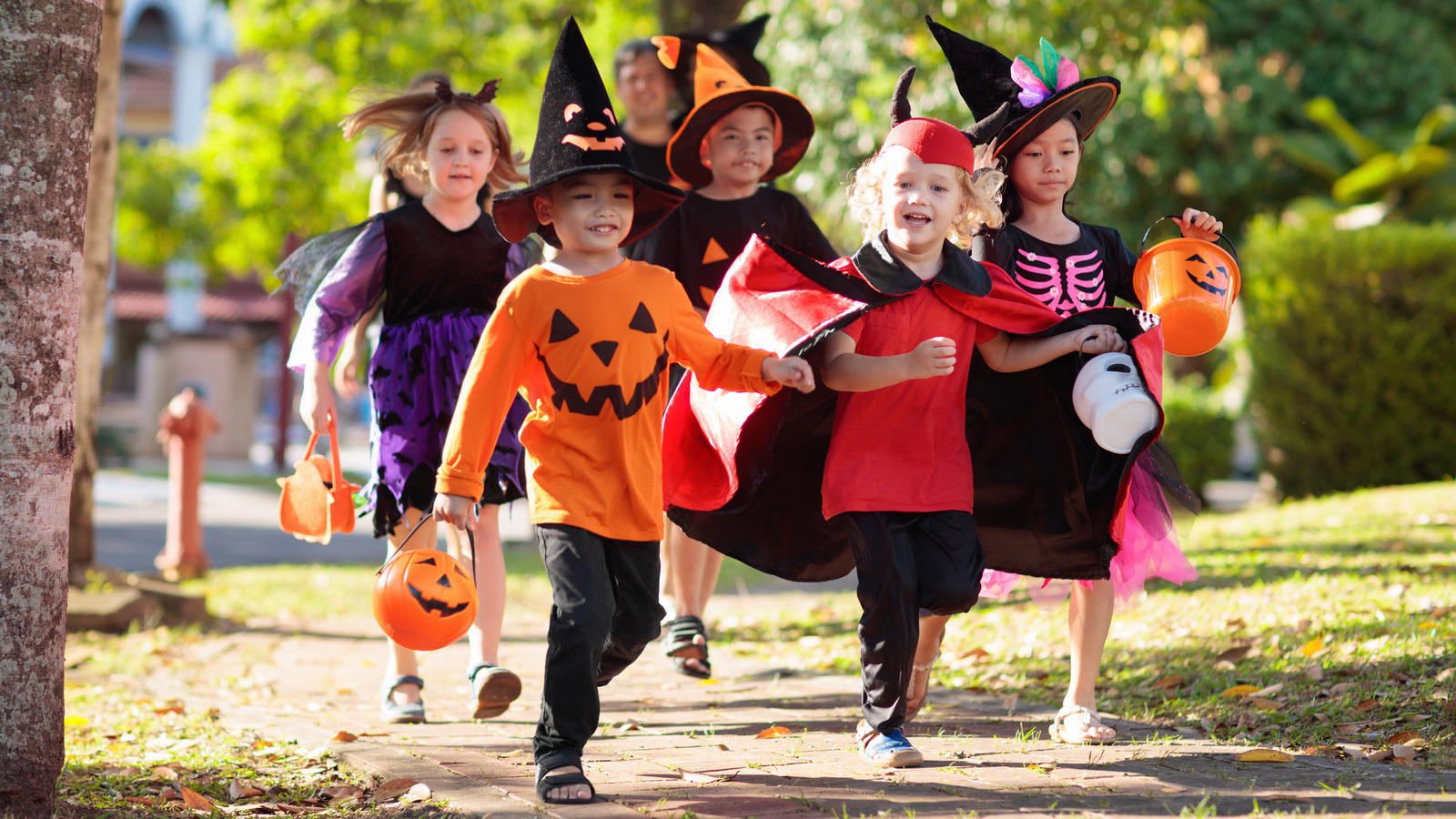
Every year, millions of children don costumes, grab their pumpkin buckets, and venture out into the twilight, chanting the familiar demand: “Trick or treat!” This seemingly simple act of costumed solicitation for candy is the cornerstone of modern Halloween celebrations. Yet, the practice is far from modern, drawing roots from ancient Celtic festivals and medieval European customs.
Understanding the full scope of how this beloved custom developed requires a journey through time, tracing the path from spiritual appeasement to organized community events designed to curb juvenile mischief. In short, the answer to here’s how trick-or-treating became a Halloween tradition involves immigration, poverty, and post-war suburban growth, merging folklore with American consumerism.
Key Takeaways
- The practice originated with ancient Celtic harvest festivals, particularly Samhain, where people disguised themselves to ward off or confuse spirits.
- Medieval European customs like “souling” and “mumming” laid the groundwork, involving costumed poor people or children begging for food in exchange for prayers or performances.
- The modern, organized form of trick-or-treating was primarily established in North America during the 1930s and 1940s as a civic effort to replace destructive pranking and vandalism.
- Post-World War II commercialization and the rise of the candy industry cemented trick-or-treating as a safe, family-friendly suburban ritual.
From Ancient Samhain to Medieval Souling
The deepest origins of the practice lie with the ancient Celtic festival of Samhain (pronounced sow-in), celebrated over 2,000 years ago in what is now Ireland, the UK, and Northern France. Samhain marked the end of summer and harvest and the beginning of the dark, cold winter, a time often associated with death.
Celts believed that on the night of Samhain, the veil between the worlds of the living and the dead blurred. People would light bonfires, wear Costume Masks typically consisting of animal heads and skins—and attempt to tell each other’s fortunes. The costumes served a dual purpose: they were either worn to mimic evil spirits or to hide from them.
The Practice of Souling in Europe
As Christianity spread, these Pagan traditions were slowly absorbed and adapted. By the 9th century, All Souls’ Day (November 2) became an established tradition. This led to the emergence of “souling” in parts of England, Ireland, and Scotland.
Poor villagers would go door-to-door begging for food, often cakes called “soul cakes.” In return, they would offer prayers for the souls of the departed relatives of the household. This exchange—a tangible gift for a spiritual service—is a clear predecessor to modern trick-or-treating.
Guising and Mumming: Performance for Treats
Parallel to souling, another custom developed, known as “mumming” or “guising.” In Scotland and Ireland, particularly among young people, dressing up (guising) involved going from house to house and offering a song, poem, or dance in exchange for a treat. This shifted the exchange from pure charity to entertainment.
Crucially, these European traditions—the costumes, the exchange of a service for a treat, and the timing around the end of October—were all carried across the Atlantic by successive waves of European immigrants, particularly during the 19th-century Irish Potato Famine.
The Americanization of Halloween and the Great Depression
When Halloween traditions arrived in America, they mixed with local customs and the diverse European folkways already present. By the early 20th century, Halloween was often characterized by rowdy, sometimes dangerous, public pranks.
In the 1920s and early 1930s, especially during the hardship of the Great Depression, property damage caused by Halloween vandalism escalated dramatically. It was often severe, costing communities significant money in repairs. Municipal leaders, local parents, and civic organizations sought a solution to redirect this destructive energy.
The Emergence of Organized Community Events
This is the critical turning point for how trick-or-treating became a Halloween tradition in the United States. Cities began sponsoring parades and parties to offer structured alternatives to vandalism. The idea of structured, house-to-house solicitation emerged as a way to engage children positively.
By giving children a recognized, sanctioned activity—asking for a “treat” in exchange for not playing a “trick”—communities effectively monetized and contained the youthful exuberance. Newspaper archives show that the term “trick or treat” appeared sporadically in the U.S. and Canada in the 1920s, gaining major traction in the late 1930s.
The Post-War Boom and Commercialization
The transition to the family-centric holiday we know today was cemented in the years following World War II (1945–1960). The economic boom and the rise of suburban life created the perfect conditions for the custom to thrive.
The increasing focus on suburban safety and the growth of the television industry standardized the holiday across the nation. TV shows and magazines began depicting cheerful children visiting neighbors, reinforcing the friendly, wholesome image of the custom.
Candy Corporations Take Center Stage
Perhaps the most significant factor was the commercialization driven by major candy manufacturers. Before the 1950s, children often received fruit, nuts, homemade cookies, or small coins. However, the rise of individually wrapped, mass-produced candy made it the ideal, safe, and easily distributable treat.
By the late 1950s, candy companies heavily marketed their products specifically for Halloween use. The convenience and perceived safety of factory-sealed sweets quickly pushed homemade goods out of the picture, solidifying the economic engine that drives the modern holiday.
Today, the tradition continues its evolution, adapting to concerns over allergies, safety regulations, and even modern technology, but the core structure established almost a century ago—costumed children soliciting treats—remains the defining feature.
Conclusion
The journey of how trick-or-treating became a Halloween tradition is a fascinating narrative that spans millennia, moving from the sacred spaces of Celtic ritual and the charitable acts of medieval Europe to the civic planning of 1930s America. What began as a means to communicate with or appease the dead transformed into a structured, family-oriented, and highly commercialized custom.
This custom is a testament to cultural resilience, demonstrating how societies adapt and repurpose ancient practices to fit new social and economic realities, ensuring that the spirit of Samhain—the community coming together at the threshold of winter—lives on through the promise of a handful of candy.
Frequently Asked Questions (FAQ)
When did trick-or-treating first appear in the United States?
While the underlying customs arrived with immigrants in the 19th century, the phrase “trick or treat” was first documented in North America around the mid-1920s, primarily in western states and Canadian provinces. It became a widely recognized national custom following World War II, driven by civic efforts to manage escalating vandalism.
What are the historical precursors to trick-or-treating?
The main historical precursors are the ancient Celtic festival of Samhain, where disguises were worn to confuse spirits, and the medieval European customs of “souling” (begging for food in exchange for prayers for the dead) and “guising” or “mumming” (performing or telling fortunes in exchange for treats).
Why is it called “trick or treat”?
The phrase “trick or treat” refers to a veiled threat, although in modern practice it is rarely serious. It is a direct acknowledgment of the historical dilemma faced by homeowners in the 1930s: either provide a “treat” (a small gift or offering) or risk facing a “trick” (vandalism or mischief) orchestrated by the costumed solicitor. The community organization of the custom effectively neutralized the “trick” aspect.
Did people always give out candy for Halloween?
No. Historically, especially before the 1950s, treats often consisted of homemade items like cookies, cakes (soul cakes), nuts, fruit, or small coins. The rise of individually wrapped, mass-produced candy after WWII provided a perceived safer and more convenient option, leading to the dominance of confectionery treats today.